

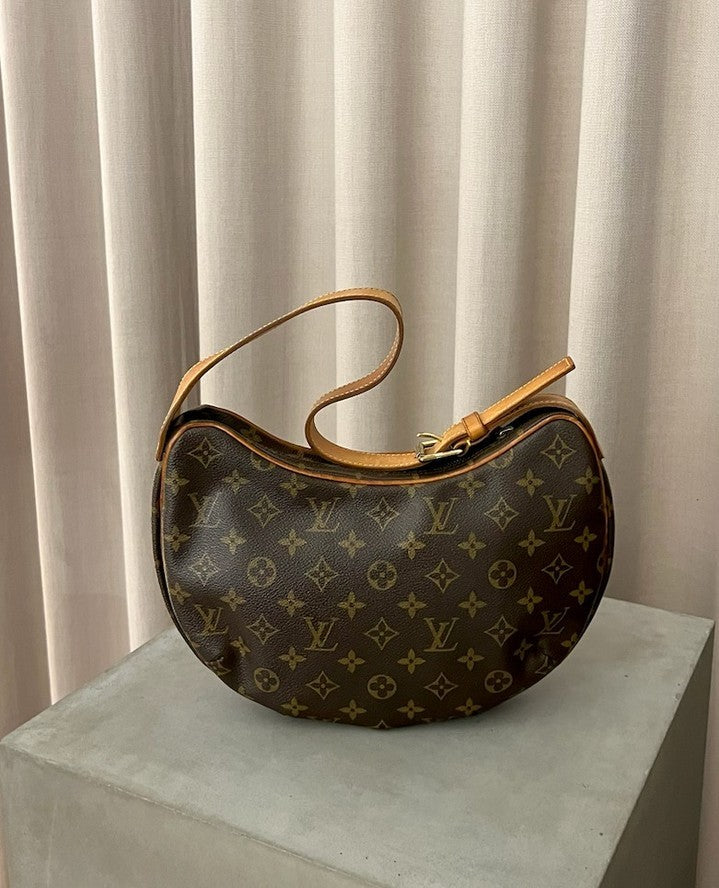
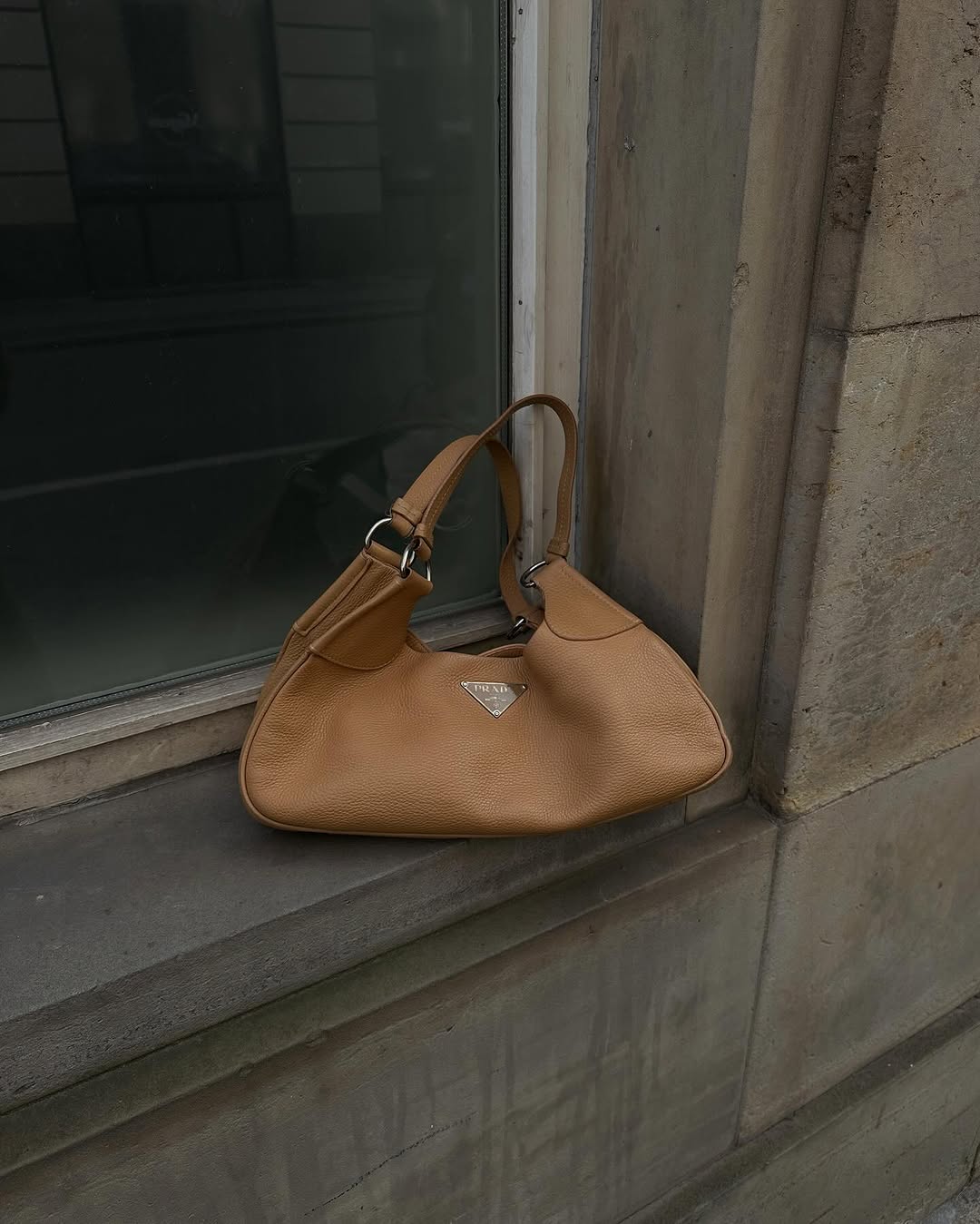
Learning how to tell if a Louis Vuitton Pochette Métis is real matters more than it does for almost any other bag in the LV lineup. The Pochette Métis sits in a rare sweet spot: compact enough to be an everyday crossbody, structured enough to feel like a proper luxury piece, and desirable enough to command strong resale - which is exactly why it has become one of the most heavily counterfeited handbags on the market.
The problem is that today's counterfeits are no longer the flimsy, obviously-wrong copies of a decade ago. Modern "super fakes" now replicate the signature S-lock, the interior heat stamp and even the general feel of the coated canvas with unsettling accuracy. The good news is that authentication is not about finding one magic clue - it is about reading the whole bag. Get the construction, hardware, canvas and codes to agree, and the truth becomes clear.
Key takeaways from this guide:
- No single detail confirms authenticity - the combination of S-lock, heat stamp, canvas alignment and date code/microchip tells the real story.
- Authentic brass hardware feels substantial and evenly plated; fakes tend to feel light, hollow or overly shiny.
- Heat stamp font and kerning are among the most reliable tells - genuine lettering is thin, even and level.
- Bags made through ~2021 carry a stamped date code; later bags use an embedded RFID microchip and no visible date code.
- Reverse Monogram, East-West and Micro variants each have their own proportions - mixed features are a red flag.
- Buying from an authenticated source removes the guesswork super fakes are designed to create.
Why the Pochette Métis Is One of the Most Faked LV Bags
The Pochette Métis has achieved genuine cult status. Its structured silhouette photographs beautifully, its crossbody strap makes it practical, and its price point sits below the marquee handbags while still delivering the full Louis Vuitton experience. That mix of accessibility and prestige is catnip for counterfeiters.
Because the bag holds its value so well on the resale market, it attracts a disproportionate amount of forgery attention. It is fair to say the Pochette Métis is a bag fakers focus on - the returns are high, so the effort put into replicating it is unusually high too. You will encounter copies at every price tier, from obvious street fakes to convincing super fakes that fool casual buyers.
That is why this guide is model-specific. General LV knowledge helps, but the Pochette Métis has quirks - the S-lock, the specific heat-stamp placement, variant-dependent proportions - that reward a targeted eye. Think of this as a companion to the wider Louis Vuitton collection know-how rather than a substitute for it.
One honest caveat before we begin: never rely on a single feature. Fakers replicate individual details all the time. Authentication is a process of confirming that everything agrees with everything else - and with the specific era and variant the bag claims to be.
A Quick History and the Pochette Métis Family
Louis Vuitton launched the Pochette Métis in 2015, and it became a modern icon almost immediately. The original was a structured crossbody in coated Monogram canvas with the now-signature S-lock closure, a top handle and an adjustable, detachable strap. Its clean lines and organized interior struck a chord that has never faded.
Over the following years the family expanded. Understanding the variants matters, because counterfeiters frequently mix features across versions - an "East-West" with the wrong strap, or a Reverse Monogram with the wrong hardware finish.
| Variant | Material | Approx. dimensions | Key features |
|---|---|---|---|
| Original (Monogram) | Coated Monogram canvas | ~25 × 19 × 9 cm | S-lock, top handle, detachable strap |
| Reverse Monogram | Reverse (light) Monogram canvas | ~25 × 19 × 9 cm | Lighter background, same S-lock silhouette |
| Empreinte | Embossed grained leather | ~25 × 19 × 9 cm | Debossed Monogram, painted edges |
| East-West | Coated Monogram canvas | ~21.5 × 13.5 × 6.5 cm | Horizontal silhouette, chain-and-leather strap |
| Micro | Coated Monogram canvas | ~14 × 11 × 4.5 cm | Nano scale, mini S-lock, chain strap |
Retail for the Pochette Métis family sits in the approximate range of €2,000-€2,600 (US $2,150-$2,800) depending on variant and year, with Empreinte typically at the higher end. Because resale value holds strongly - and in some cases discontinued colorways command a premium - the incentive to authenticate carefully before buying is real. For a full model breakdown, our Pochette Métis guide covers which version suits which buyer.


The S-Lock and Hardware: Your First Authentication Check
The S-lock is the Pochette Métis's signature closure, and it is one of the first places to look. The front features a flip-buckle mechanism that opens the flap, and the quality of this hardware separates genuine bags from most fakes at a glance.
Engraving quality
Any engraving on the hardware - the "Louis Vuitton Paris" text or "made in" markings where present - should be clean, crisp and pressed, never etched, blurry or uneven in kerning. Look closely at the spacing between letters. Authentic engraving has confident, consistent depth; counterfeit engraving often looks shallow, scratchy or slightly wandering along its baseline.
Weight and finish
Genuine brass hardware feels substantial and evenly plated. Pick the bag up and register the weight of the S-lock and the strap fittings - real LV hardware has heft. Fakes frequently feel light, hollow or noticeably too shiny, with a plasticky gold tone rather than the warm, even finish of proper brass plating.
Mechanism and alignment
The buckle should operate smoothly and the flap should align perfectly when closed - no gap, no tilt, no forcing. Check the D-rings and the engraving on the strap hardware too; these smaller components are often where corners get cut. A closure that is stiff, wobbly or misaligned is an immediate concern.
Heat Stamp, Font and Kerning
The interior heat stamp is one of the most information-dense authentication points on the entire bag. On the Pochette Métis it typically reads "Louis Vuitton" with "made in France," "made in Spain" or "made in USA" beneath, stamped into the leather lining trim.
Reading the font
Louis Vuitton's lettering is precise and restrained. Study the shape of the O's - they should be round and even, not squashed or lopsided. The letterforms are thin and consistent in weight, the spacing (kerning) is regular, and the baseline is dead level. The "L" in "Louis" has a specific proportion, and the "tt" in "Vuitton" should sit cleanly together.
Common fake mistakes
Counterfeit heat stamps give themselves away in predictable ways: letters that are too fat or bold, uneven spacing between characters, a stamp pressed too deep (leaving a heavy indent) or too shallow (barely visible), and off-center placement. If the stamp looks smudged, doubled or crooked, treat it as a serious red flag.
| Feature | Authentic | Common fake tell |
|---|---|---|
| Heat stamp font | Thin, even letterforms; round O's; level baseline | Fat or bold letters; uneven kerning; crooked line |
| Stamp depth | Crisp, consistent, cleanly pressed | Too deep, too shallow, smudged or doubled |
| S-lock engraving | Clean, pressed, consistent spacing | Etched, blurry, wandering baseline |
| Hardware weight | Substantial, evenly plated brass | Light, hollow, overly shiny tone |
Canvas Pattern Alignment and Stitching
The coated Monogram canvas is where craftsmanship shows most plainly. Louis Vuitton cuts and aligns its canvas with intention, and the Pochette Métis is no exception.
Monogram symmetry
The LV logos and flower motifs should be sharp, correctly spaced and thoughtfully aligned across the flap and body. The pattern should not look pixelated, muddy or off-color. While no two canvas cuts are identical - the pattern shifts slightly depending on where the panel was cut - the symmetry and print quality should always read as deliberate and clean.
Reverse Monogram logic
The Reverse Monogram version flips the color scheme, placing the pattern on a lighter background. The coloring should be warm and consistent, not washed-out or grey. Because the contrast is different, alignment reads differently too - but the same principles of sharpness and symmetry apply.
Stitching
Stitching on a genuine Pochette Métis is even, with a consistent stitch count and no loose threads or crooked seams. Look for the signature tonal or contrast stitching where applicable - the yellow-toned thread against Monogram canvas is a classic LV signature and should be uniform in tension and spacing. Sloppy, uneven or fraying stitches point firmly toward a counterfeit.
Interior lining
The interior lining color and microfibre texture serve as a useful supporting check. It should feel dense and smooth, with the correct tone for the variant. A lining that feels thin, scratchy or the wrong color is worth investigating further.
Date Code vs. Microchip by Era
This is one of the most misunderstood areas of LV authentication, and it is critical for the Pochette Métis because the bag spans the transition period. Louis Vuitton has changed how it marks its bags, and knowing which system applies to a given era is essential.
The shift
Bags made through roughly 2021 carry a stamped date code hidden inside the bag. From around 2021 onward, LV phased in an embedded RFID microchip and stopped using a visible date code entirely. This means a modern Pochette Métis should not have a visible date code - and an older one claiming to have a chip is a timeline contradiction.
How to read a date code
On older bags, the date code follows a format of two letters (the factory) followed by four digits, where the digits encode the week and year of production. On the Pochette Métis it hides in a seam or on an interior tab. The letters and numbers should be crisply stamped, correctly formatted and consistent with the era.
Timeline red flags
A brand-new-looking Pochette Métis with a prominent, easy-to-find date code, or a seller insisting a 2018 bag has an internal microchip, should raise your eyebrows. The marking system must match the production era the bag claims. For a full breakdown of how LV codes work across every generation, read our dedicated Louis Vuitton date code vs. microchip guide.
One essential warning: a date code or chip alone never proves authenticity. Fakers replicate date codes routinely, and the microchip cannot be read by consumers - there is no app that lets a buyer scan and verify it. Use the code as one data point among many, never as a verdict.
Variant-Specific Tells: Reverse, East-West & Micro
Because counterfeiters often mix features across versions, matching every detail to the specific variant is one of the most powerful checks you can run.
Reverse Monogram
Confirm the canvas coloring is correct - a warm, light background rather than a dull grey. The hardware finish and heat-stamp placement should match the standard bag; some fakes get the canvas right but pair it with hardware that is the wrong tone or an off-center stamp.
East-West
The East-West is a horizontal reimagining of the classic silhouette, noticeably smaller and wider. It carries a single chain-and-leather strap rather than the classic's adjustable webbing strap. If the proportions look like the standard bag turned sideways but with the wrong strap, something is off - the East-West has its own distinct dimensions and hardware layout.
Micro Pochette Métis
The Micro is a nano-scale version, and scale is exactly where fakers stumble. The proportions must be genuinely tiny, with a correctly sized mini S-lock and the appropriate chain strap. Counterfeits frequently get the scale wrong - a "Micro" that looks too tall, too boxy or fitted with a full-size lock is a giveaway.
Empreinte leather
The Empreinte version swaps canvas for embossed grained leather. Check the grain depth and the sharpness of the debossed Monogram - genuine embossing is crisp and dimensional, not shallow or mushy. Edge painting should be neat and evenly applied, without cracking or gaps.
Buying a Pre-Owned Pochette Métis Safely
Here is the honest reality of the 2026 market: super fakes have become good enough to defeat many single checks. A convincing S-lock, a passable heat stamp and correctly toned canvas can appear on the same counterfeit bag. That does not make authentication impossible - but it does raise the stakes for buyers going it alone.
The most reliable way to remove the guesswork is to buy from a source that authenticates every piece before it is listed. At Collector's Cage, each bag is examined by specialists and backed by our Authenticity Guarantee, so you are not depending on your own eye against forgers who study these bags full-time.
Every listing is a one-of-one piece - the exact bag in the photos is the bag you receive - and new arrivals land weekly. You can browse the current selection in the Louis Vuitton collection, and if you are comparing models, the Louis Vuitton Speedy authentication guide is a useful companion read for the broader LV lineup.
If you are buying elsewhere, request clear, well-lit photos of the following before committing:
- The interior heat stamp, close enough to read the font and kerning
- The S-lock engraving and the buckle mechanism
- The date code or microchip area, appropriate to the claimed era
- Canvas alignment across the flap and body
- The strap hardware and D-ring engraving
A seller who cannot or will not provide these is telling you something. A legitimate seller welcomes scrutiny.
Frequently Asked Questions
Do all Louis Vuitton Pochette Métis bags have a date code?
No. Bags produced through roughly 2021 carry a stamped date code hidden in a seam or interior tab. From around 2021 onward, Louis Vuitton switched to an embedded RFID microchip and stopped using visible date codes entirely, so a newer Pochette Métis will not have one.
How do I authenticate a Pochette Métis with a microchip and no date code?
Since the microchip cannot be read by consumers, you authenticate a chipped bag using every other signal: heat stamp font and kerning, S-lock engraving quality, hardware weight, canvas alignment and stitching. The absence of a date code on a recent bag is expected and normal - focus on the physical construction.
What is the easiest fake tell on a Pochette Métis?
The heat stamp and hardware are usually the fastest giveaways. Fake heat stamps often have letters that are too fat, uneven spacing or a crooked baseline, while counterfeit hardware tends to feel light, hollow or too shiny. Together they catch a large share of fakes quickly.
How much does a genuine Louis Vuitton Pochette Métis cost?
Retail sits in the approximate range of €2,000-€2,600 (US $2,150-$2,800) depending on variant and year, with the Empreinte leather version typically at the higher end. Pre-owned pricing varies with condition and colorway, and some discontinued versions hold or exceed retail on the resale market.
Is the Micro Pochette Métis harder to authenticate than the full size?
In some ways it is easier, because fakers frequently get the scale wrong - a Micro must be genuinely tiny with a correctly sized mini S-lock. That said, the same principles apply: check the heat stamp, hardware and canvas at the smaller scale, since the details are proportionally reduced but should remain crisp.
Can a date code or serial number alone prove my Pochette Métis is real?
No. Counterfeiters replicate date codes and format them correctly, and the microchip cannot be verified by buyers. A code is only one data point - authenticity is confirmed by the whole bag agreeing across construction, hardware, canvas and era-appropriate marking, ideally verified by a specialist.


