

Learning how to tell if a Fendi bag is real has become an essential skill for anyone shopping the pre-owned luxury market in 2026. The house's most coveted silhouettes — the Baguette and the Peekaboo above all — sit near the top of every counterfeiter's wish list, and the fakes have grown alarmingly convincing. A quick glance at the FF logo is no longer enough to separate an authentic piece from a well-made replica.
The good news is that genuine Fendi authentication is a learnable craft. Once you understand the house codes — the logic behind the Zucca pattern, the weight of Roman hardware, the discipline of Selleria stitching — the tells become obvious, and they recur across nearly every model the house produces. This guide walks you through each layer, from logo alignment to RFID chips, so you can buy with confidence.
Key takeaways from this guide:
- The FF/Zucca pattern must run continuously and align at every seam, zip and corner — misalignment is the single most common fake tell.
- Authentic Fendi hardware is substantial, evenly plated and precisely engraved; flaking or shallow lettering signals a counterfeit.
- Serial numbers and modern RFID chips support authentication but never prove it on their own — cross-reference everything.
- Selleria hand-stitching, genuine leather feel and correct branded lining separate real Fendi from plasticky replicas.
- The Baguette, Peekaboo and By The Way each have model-specific hardware and stamp placements worth memorizing.
- The safest route is buying pre-owned pieces that are already expert-authenticated and backed by a guarantee.
Why Fendi Authentication Matters More Than Ever
Fendi has enjoyed a genuine renaissance. The Baguette — immortalized by Sex and the City and reissued in dozens of limited editions — is once again a wardrobe cornerstone, while demand for the structured Peekaboo shows no sign of slowing. Rising resale values inevitably attract rising numbers of fakes.
The counterfeit market has evolved. Where a fake Fendi bag once betrayed itself with sloppy logos and lightweight zips, today's better replicas mimic the surface details closely. Surface-level checks alone will let a convincing fake slip through. What holds up under scrutiny are the deeper construction standards — the details factories consistently get wrong.
Authentication is not guesswork or luck. It is a repeatable process built on understanding the house's codes. Treat this as an evergreen collector's resource: the specifics of a chip or serial format may shift over the years, but the underlying craftsmanship principles endure.
A Quick Background: The House of Fendi and Its Codes
Fendi was founded in Rome in 1925 by Adele and Edoardo Fendi as a leather goods and fur workshop. The house's creative turning point came in 1965, when a young Karl Lagerfeld joined and, according to Fendi lore, sketched the now-iconic interlocking double-F logo in seconds. The mark stands for "Fun Fendi" — though it's often read as "Fendi Fendi" — and is formally known as the Zucca monogram.
Understanding these codes matters because they are precisely what counterfeiters get wrong. The double-F alignment, the saddle-stitched Selleria line, the substantial feel of Roman-made hardware — these recur across every model. Memorizing a checklist for one bag helps with one bag; understanding the codes helps with all of them.
One caveat worth holding in mind: construction standards vary slightly by era and collection. A 1990s vintage Baguette will not look identical inside to a 2024 Peekaboo. Context always matters, so compare like with like.


The FF / Zucca Logo: Alignment Is Everything
If you learn only one thing about Fendi authentication, make it this: the FF pattern must run continuously and align at seams, corners and wherever two panels meet. Fendi's factories carefully match the print so the motif flows without interruption. Counterfeiters cut corners here, literally.
Reading the pattern correctly
In an authentic Zucca print, the top F sits upright and the bottom F is inverted, mirrored beneath it. Spacing between motifs is consistent, and each letter is crisp and clearly defined — whether on woven jacquard fabric or coated canvas. The color contrast between the two brown tones should be even across the entire bag.
Common fake tells
Watch for a pattern that is cut off mid-motif at the edge of a panel, motifs that fail to line up across a zip or seam, or blurry, uneven definition where the letters bleed together. Poor color contrast — either washed out or too stark — is another giveaway.
Note the distinction between the larger Zucca monogram and the smaller-scale Zucchino pattern; both are legitimate, but the scale should be consistent within a single bag. Logo-stamped hardware should echo the same crispness you see in the fabric print.
Hardware, Engravings and Zippers
Genuine Fendi hardware feels serious in the hand. It is weighty, evenly plated and free of flaking, bubbling or discoloration. Lift the bag by its clasp or handle and you should sense real metal, not hollow lightweight castings.
Engravings and zippers
The FENDI engraving should be crisp, correctly kerned and of consistent depth. Check the twist-lock, the base feet and any clasp — the lettering must be sharp, never shallow or smudged. Zipper pulls are frequently branded, often by Lampo or Riri, or Fendi-marked directly; the zip should glide smoothly with no rough or catching teeth.
Model-specific hardware offers strong clues. The flat Baguette buckle and the Peekaboo twist-clasp each have a distinctive feel and finish that fakes struggle to replicate.
| Feature | Authentic Fendi | Fake Fendi |
|---|---|---|
| Weight | Substantial, solid metal | Light, hollow, tinny |
| Plating | Even, durable finish | Flaking, bubbling, discoloration |
| FENDI engraving | Crisp, even depth, correct kerning | Shallow, smudged, uneven spacing |
| Zipper | Smooth glide, branded pull (Lampo/Riri) | Sticky, rough teeth, unbranded |
| Clasp action | Precise, firm click | Loose or overly stiff |
Serial Numbers, RFID Tags and Interior Stamps
Fendi has historically used date and serial codes on a small leather tab sewn inside the bag. Format and font consistency matter more than the number itself. Fonts should match the era, characters evenly spaced, embossing clean.
Modern RFID and NFC chips
From approximately 2021 onward, many newer Fendi pieces carry an embedded RFID/NFC authentication chip. Scanned with the right tools, it links to Fendi's records. Understand what this is — a supporting feature, not standalone proof. A fake can lack a chip that a real bag should have, but the absence of a chip on an older bag is entirely normal.
The interior heat-stamp
Look for the interior heat-stamp reading FENDI made in Italy, typically accompanied by roma. Examine the spacing, the font and the embossing depth. Authentic stamps are neat and precise; fakes often show uneven pressure, wrong fonts or awkward spacing.
A crucial caution: serial numbers alone do not authenticate a bag. Counterfeiters copy real numbers freely. Always cross-reference the serial against stitching, hardware, logo alignment and leather — no single element is conclusive.
Stitching, Leather and Lining Tells
Fendi's Selleria line is defined by hand-executed saddle stitching — even, slightly raised, and worked in a signature contrast thread. The stitches should be regular in length and tension, with no loose ends or skipped passes. This is one of the hardest details for factories to fake at scale.
Leather and lining
Genuine Fendi leather is supple, with a natural grain and a real leather scent. Replica hides often feel plasticky, too uniform, or carry a chemical smell. Inside, the lining fabric should be high quality and correct for the era — edges neatly stitched rather than crudely glued.
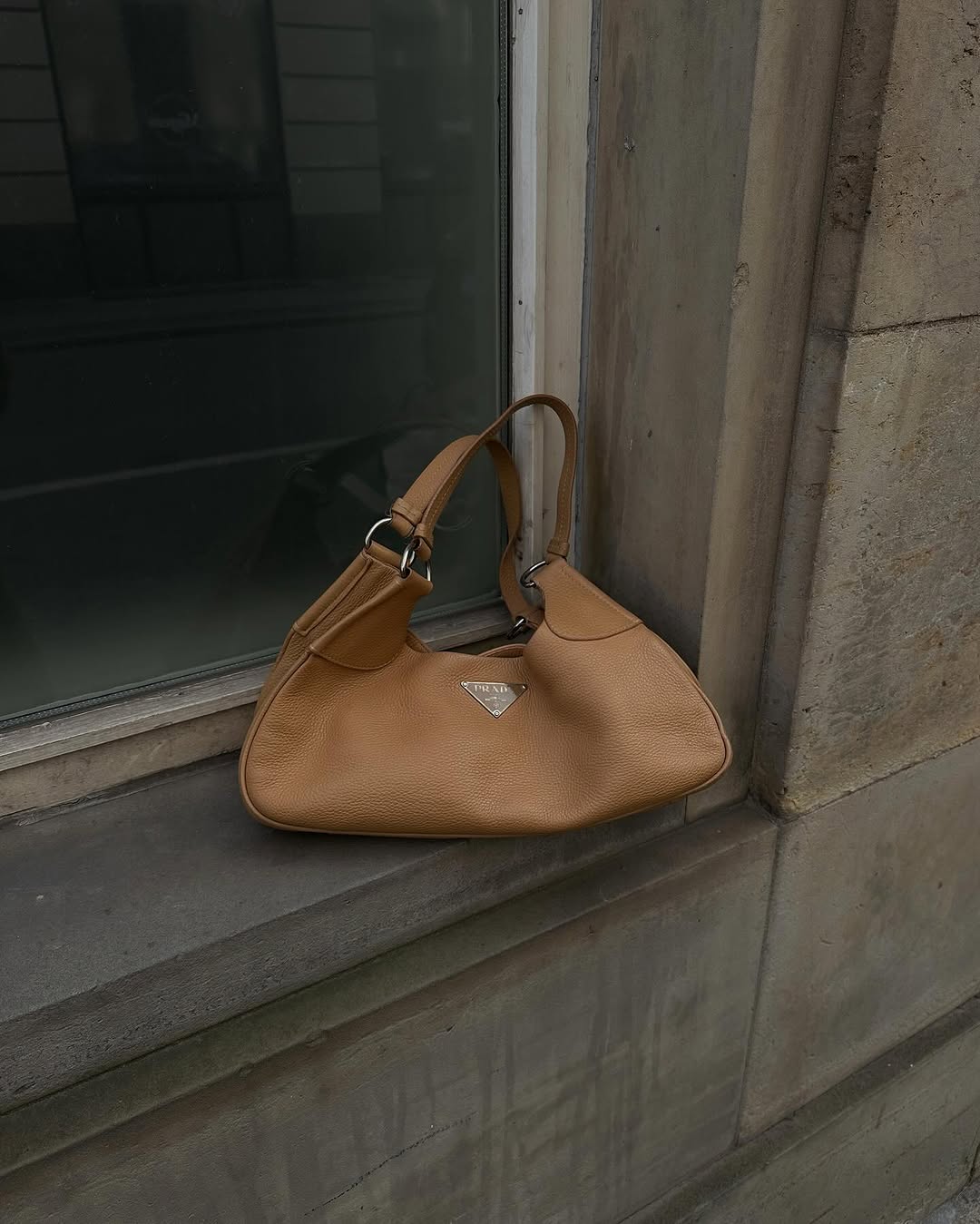
As a final gut-check, assess overall symmetry. Panels should match, seams should align, and the bag should hold its intended shape. If something feels subtly off in proportion or balance, trust that instinct and dig deeper. The same disciplined eye applies across houses — our guide to authenticating Prada walks through a comparable stitching-and-stamp methodology worth reading alongside this one.
Model-by-Model: Baguette, Peekaboo and By The Way
The Fendi Baguette
The authentic Fendi Baguette is defined by its flat front buckle, its compact horizontal shape and a single short shoulder strap sized to tuck under the arm — hence the name. The interior stamp sits in a consistent placement, and the flap should close flush without gapping. On patterned versions, the FF motif must align across the flap and body.
The Peekaboo
The Peekaboo is a structured bag with a distinctive dual-compartment interior and a signature twist-lock closure that lets the sides "peek" open. Check the top handle's stitching for even, tight work and confirm the twist-lock operates with a precise, satisfying action. The internal divider and its hardware are frequent weak points on fakes.
By The Way
The By The Way takes a small boston shape with side straps and prominent Selleria stitch detailing. Examine the raised saddle stitch and the balance of the two rolled top handles. As with every model, the leather quality and stamp precision should match the price point.
| Model | Key authentication points | Approx. pre-owned price (EUR / US$) |
|---|---|---|
| Baguette | Flat buckle, FF alignment across flap, single short strap, interior stamp placement | €900–€2,500 (approx. $980–$2,700) |
| Peekaboo | Twist-lock action, dual compartments, top-handle stitching, divider hardware | €1,800–€4,500 (approx. $1,950–$4,900) |
| By The Way | Boston shape, side straps, raised Selleria stitch, rolled handles | €700–€1,800 (approx. $760–$1,950) |
Prices vary considerably with condition, leather type, limited-edition status and completeness of accompanying materials. For a fuller breakdown, see our price guide to Fendi bags in the US and Europe, and browse styles in our Fendi bag design guide.
Buying Pre-Owned Fendi With Confidence
Even with a thorough understanding of these codes, the single safest route to owning Fendi is to buy pieces that have already been authenticated. At Collector's Cage, every bag is expert-checked before it reaches you and backed by our authenticity guarantee — so the burden of verification does not rest on your shoulders alone.
Our Fendi collection is curated with one-of-one pieces and refreshed with new arrivals weekly, spanning the Baguette, Peekaboo, By The Way and beyond. If you're building a wider luxury wardrobe, the same standards apply across our Gucci, Prada and Louis Vuitton edits.
There is a strong case for pre-owned beyond peace of mind. Buying an already-authenticated bag lets you sidestep retail markups while accessing discontinued colors and sold-out editions the boutiques no longer carry. It is also the more sustainable choice, extending the life of beautifully made objects rather than commissioning new production. For collectors who value both craft and conscience, pre-owned is quietly the smarter play.
Frequently Asked Questions
Do all authentic Fendi bags have a serial number?
Most modern Fendi bags carry a serial or date code, typically on an interior leather tab. However, formats have changed over the decades and some vintage pieces present differently. A serial number supports authentication but never proves it alone, since counterfeiters copy real numbers.
Does a real Fendi bag have an RFID or NFC chip?
Many Fendi pieces produced from roughly 2021 onward include an embedded RFID/NFC chip linked to the brand's records. Older bags predate this technology entirely, so the absence of a chip on a vintage piece is completely normal and not a sign of a fake.
How can I tell if a Fendi Baguette is real?
Check that the FF pattern aligns cleanly across the flap and body, that the flat front buckle feels substantial with crisp engraving, and that the single short strap and interior stamp are correctly proportioned and placed. Combine these with a check of the leather feel and stitching for a reliable read.
Where is the authenticity stamp inside a Fendi bag?
The interior heat-stamp — usually reading "FENDI made in Italy" with "roma" — is typically embossed on the inner lining or a leather panel inside the bag. Inspect the font, spacing and embossing depth; genuine stamps are precise and evenly pressed.
Can I authenticate a Fendi bag from photos alone?
Photos can reveal a great deal — logo alignment, hardware finish, stamp quality — but they have limits. Weight, leather smell and the feel of the stitching require the bag in hand. When possible, combine detailed images with a physical inspection or a professional authentication service.
Is it safe to buy a pre-owned Fendi bag online?
Yes, provided you buy from a seller who authenticates every piece and stands behind it. At Collector's Cage each bag is expert-checked and covered by our authenticity guarantee, which removes the risk that comes with unverified marketplace listings.


