

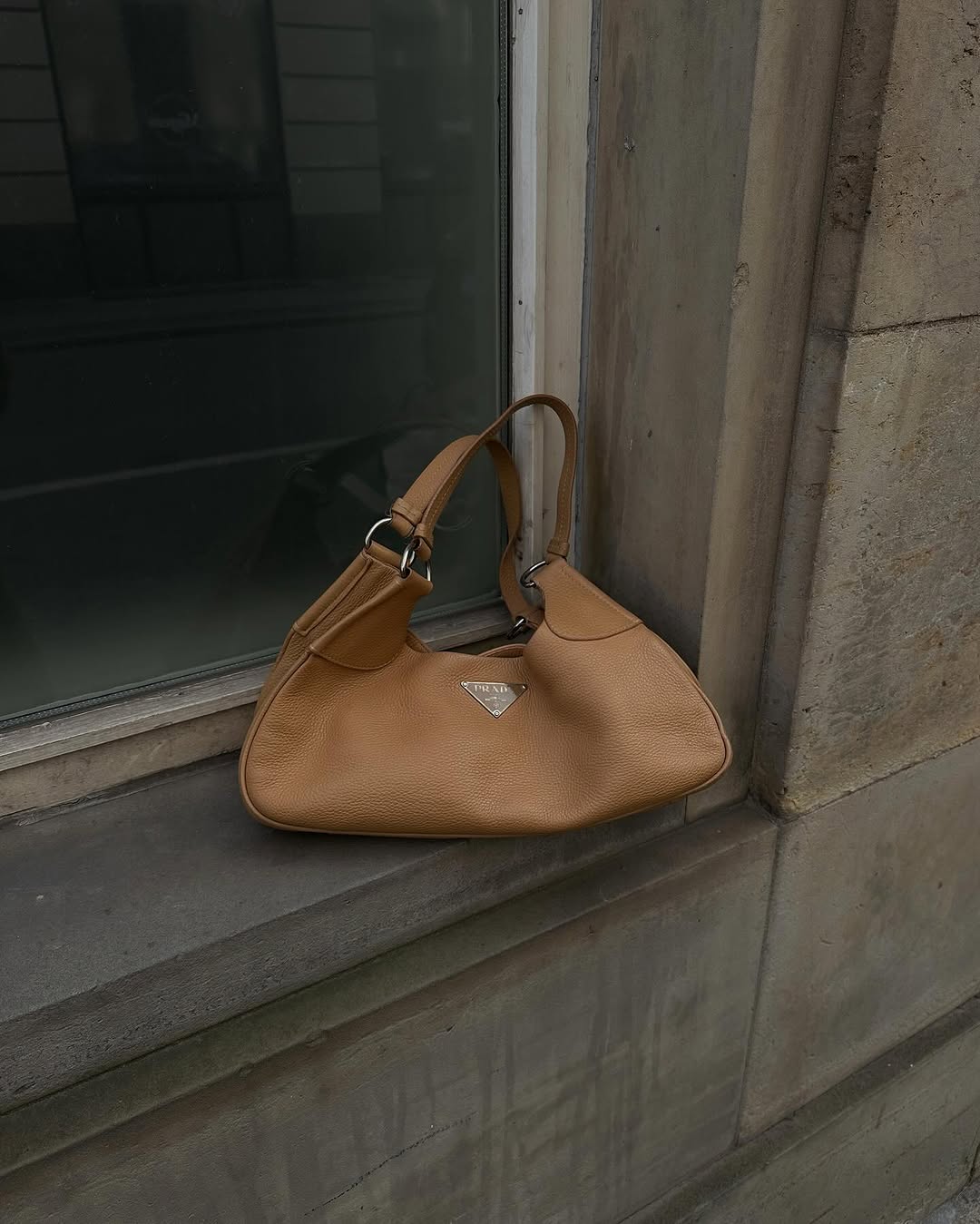
Learning how to tell if a Dior bag is real has become a genuine skill in 2026 - not a five-minute glance, but a considered read of leather, stitching, hardware and stamps. As Dior's icons have climbed in price and desirability, counterfeiters have followed the money, and the gap between an obvious fake and a convincing one has narrowed dramatically. The old giveaways (crooked logos, plastic hardware, cheap lining) still exist on street-market bags, but the pieces circulating on resale platforms today are a different animal.
This guide walks through the details that still separate authentic from fake across the three most-copied lines - the Lady Dior, the Book Tote and the Saddle. No single feature confirms a bag; authentication is always the sum of the parts. Read the whole picture, and you'll spot the inconsistencies that even a good replica can't fully hide.
Key takeaways from this guide:
- Authentication is cumulative - the heat stamp, hardware, stitching and construction must all agree, not just one detail.
- An authenticity card or microchip alone never proves a bag is real; both are routinely faked.
- "Made in Italy" and "Made in Spain" are both legitimate Dior origins - neither is a red flag on its own.
- The Lady Dior lives and dies by its Cannage symmetry and D-I-O-R charms; the Book Tote by its embroidery; the Saddle by its silhouette.
- 2026-era superfakes get materials and stamps close - they still fail on hardware weight, edge painting and interior finishing.
- For high-value pieces, an authenticated seller beats DIY checks every time.
Why Dior Authentication Matters in 2026
Christian Dior has spent the last decade transforming from a fashion house into a hard-asset brand. The Lady Dior and Book Tote in particular have seen repeated retail increases, and steady demand on the secondary market has kept resale values firm. Where value goes, counterfeiters follow - and the volume of convincing fake Dior bags has grown in direct proportion.
The uncomfortable truth is that the tells everyone used to rely on have largely disappeared from the better replicas. Modern fakes use real calfskin, replicate the Cannage stitch, and even reproduce microchips and cards. That doesn't mean authentication is impossible - it means it has moved into the details: plating weight, stitch tension, edge paint under magnification, the crispness of a serif.
Remember one principle throughout: no single feature confirms authenticity. A perfect heat stamp on a bag with sloppy edge painting is still a fake. It's the combination that tells the story. If you'd rather skip the forensics entirely, every piece in our Christian Dior collection is individually authenticated before it's listed - but understanding the checks below will make you a sharper buyer regardless of where you shop.


The 'Christian Dior' Heat Stamp: Your First Checkpoint
The interior stamp is the fastest meaningful check on any Dior bag. Depending on the model and era, you'll find "CHRISTIAN DIOR" stamped over "PARIS" - either on a small interior leather patch or embossed directly into the lining. On the Book Tote it appears on an interior jacquard or leather tab; on the Lady Dior and Saddle it's typically set into the leather interior.
What a genuine stamp looks like
Study the lettering, not just the words. Authentic Dior stamping shows even letter spacing, a consistent baseline and clean, crisp serifs. The font weight is deliberate - never bloated, never spidery-thin. Under angled light the impression should read sharp and uniform across every character.
Dior uses both foil (metallic) and blind (debossed, uncolored) stamping depending on the line, hardware tone and year. A gold-hardware bag often carries a gold foil stamp; some pieces use a tonal blind deboss. Neither is inherently more "correct" - what matters is that the execution is clean.
Origin stamps and common fakes
You'll see "MADE IN ITALY" on most pieces, but "MADE IN SPAIN" is also legitimate for certain Dior production. Origin alone is not a red flag. What gives fakes away is the execution: an uneven baseline, lettering that's too bold or too thin, mushy or shallow embossing, and inconsistent depth from one letter to the next. If the stamp looks pressed by someone guessing at the font, treat the whole bag with suspicion.
Date Codes, Authenticity Cards & the Microchip Transition
Dior's internal marking system has evolved, and understanding the eras helps you cross-check without falling for reproduced paperwork.
Blind stamps and date codes
Older Dior bags carry a discreet blind stamp - a short string of letters and numbers - typically indicating the production facility and manufacture cycle. The concept matters more than any decode table: the code should be neatly impressed, consistent in depth with the main heat stamp, and located where Dior historically placed it for that model. Counterfeiters often stamp these too deeply, too faintly, or in the wrong spot.
The authenticity card era
For years, Dior included a white authenticity card printed with model information. Here's the critical point: a card alone proves nothing. Fakes reproduce these cards convincingly, and genuine bags are frequently sold without them. Use the card as a cross-check - font quality, print sharpness, and whether the details match the bag - never as standalone proof.
The NFC microchip transition
Newer Dior pieces have moved to an embedded NFC microchip, echoing an industry-wide shift. The chip sits discreetly within the bag's construction and is not scannable by the general public - you cannot verify authenticity by tapping your phone to it. Anyone claiming a public "scan to verify" is misinformed. This mirrors the change Chanel made; our Chanel sticker-vs-microchip guide walks through the same transition in detail and is worth reading as a parallel example.
Where cards and codes earn their keep is in cross-referencing: a serial that doesn't match the card, a card font that looks off, or a "microchip" bag that shouldn't have one for its era are all useful contradictions that point toward a fake.
Lady Dior: Cannage Quilting, D-I-O-R Charms & Hardware
The Lady Dior is the house's most counterfeited bag, and its signature elements are exactly where the best authentication happens. If you're weighing sizes as well as authenticity, our Lady Dior size guide pairs naturally with this section.
Cannage quilting
The Cannage quilting must be symmetrical, with the padding aligned cleanly to the seams and a consistent stitch count per panel. On an authentic bag, the diamonds are plump and even, and the pattern lines up where panels meet. Fakes frequently show uneven diamonds, inconsistent stitch counts, or padding that pulls away from the seams. Lay the front and back side by side - they should mirror each other.
The D-I-O-R charms
The four letter charms spelling D-I-O-R hang from the handle and are a rich source of tells. Genuine charms are weighty, evenly spaced, and finished cleanly in metal or enamel with no rough edges. Check the ring attachments - they should be solid and neatly closed. Fakes often feel light and hollow, show sloppy spacing, or have thin, poorly cast letters.
Hardware and stitching
Authentic Dior hardware feels dense and cool to the touch, with deep, clean engraving on rings and feet. Lift the bag: real hardware has a reassuring heft. Inspect the stitching for regularity, the edge painting on the handles for smoothness (no cracking or bleeding), and the leather grain - Lambskin should feel soft and supple, while Cannage calfskin is firmer and more structured.
| Feature | Authentic Lady Dior | Common Fake |
|---|---|---|
| Cannage quilting | Symmetrical, plump, aligned to seams | Uneven diamonds, inconsistent stitching |
| D-I-O-R charms | Weighty, evenly spaced, clean finish | Light/hollow, crooked spacing, thin casting |
| Hardware | Dense, cool, deep engraving | Lightweight, shallow or blurry engraving |
| Edge painting | Smooth, even, no cracking | Bleeding, chipping, uneven application |
| Heat stamp | Crisp serifs, even baseline | Mushy, too bold or too thin |
Dior Book Tote: Embroidery, Weave & Construction
The Book Tote is defined by its embroidery, and that's precisely where authentication centers. Understanding its dimensions helps too - see our Book Tote size guide for the full breakdown.
Embroidery, not print
An authentic Book Tote is embroidered, not printed. Run your fingers over the pattern - you should feel the texture of dense thread. Turn the interior to inspect the reverse side of the embroidery: on a genuine bag it's neat and controlled; on fakes it's often messy, with loose threads, glue, or a printed pattern masquerading as stitching.
Logo alignment and canvas
The "CHRISTIAN DIOR PARIS" embroidery should be perfectly aligned and centered, with even thread density throughout the lettering. The woven canvas has a distinct, structured texture. Pattern registration - how precisely the motif repeats and aligns across panels - is a frequent superfake failure point; look for motifs that drift out of alignment at the seams.
Structure and interior
The Book Tote holds a boxy, structured shape with a symmetrical base and even handle drops. The interior carries the "CHRISTIAN DIOR PARIS" stamp (and on personalized pieces, an embroidered name placed cleanly). A tote that slumps, has mismatched handle lengths, or an asymmetric base has likely been built without Dior's construction standards.
Dior Saddle Bag: Shape, 'CD' Hardware & Strap
The Saddle is all about silhouette - and fakes almost always distort it.
The saddle silhouette
The genuine Saddle has a specific, graceful curved flap that arcs like an equestrian saddle. Fakes frequently get this arc wrong: too flat, too steep, or sitting awkwardly on the body. Set the bag down and study the flap's curve against the base - it should look balanced and intentional, not forced.
CD hardware and the D-stirrup
The signature "CD" magnetic hardware should feel substantial, with a clean aged or antique-gold finish where the model calls for it. On the opposite side hangs the D-stirrup charm. Genuine hardware is weighty with crisp lettering; fakes tend to feel thin and stamped, with a finish that looks flatly gold rather than richly aged.
Strap and topstitching
On embroidered or jacquard straps, the pattern must align cleanly and the adjuster hardware should match the main hardware in quality and finish. Watch for sloppy topstitching around the flap and gusset - uneven stitch length and wandering seam lines are classic fake Dior Saddle tells.
| Element | Authentic Saddle | Fake Saddle |
|---|---|---|
| Flap curve | Balanced, graceful arc | Flat, steep or misshapen |
| CD hardware | Weighty, richly aged finish | Thin, flatly gold, light |
| Strap pattern | Cleanly aligned jacquard | Misaligned, drifting motif |
| Topstitching | Even, straight, controlled | Uneven length, wandering lines |
Dust Bags, Packaging & Feel
Packaging is the weakest form of proof - but it still offers supporting evidence.
The Dior dust bag
Dior dust bags have varied by era, appearing in drawstring and flap-envelope styles, typically in a soft neutral tone with a clean logo print. The print quality should be sharp and evenly applied. That said, dust bags are among the easiest items to fake and are frequently mismatched with bags on the secondary market - so treat them as a footnote, never the headline.
Weight, smell and structure
Beyond packaging, trust your senses. A genuine Dior bag has reassuring weight, a natural leather scent (never chemical or plastic), and holds its intended structure when set down. A bag that feels flimsy, smells synthetic, or collapses out of shape is telling you something regardless of how good the stamp looks.
| Supporting evidence | What to check |
|---|---|
| Dust bag | Correct style for era, sharp logo print |
| Weight | Substantial, quality feel in hand |
| Smell | Natural leather, not chemical |
| Structure | Holds shape, no collapsing |
| Card/chip | Cross-check only - never standalone proof |
Spotting 2026-Era Dior Superfakes
The term "superfake" gets thrown around loosely, but it describes a real category: replicas made with correct materials, near-perfect heat stamps, and even replicated microchips. These are the bags that fool casual buyers and sometimes experienced ones on photos alone.
Where superfakes still fail
Even the best fakes struggle with the details that require Dior's actual factory tooling and quality control. Look for:
- Hardware weight consistency - superfakes often nail the look but not the density and balance across every piece of hardware.
- Edge painting under magnification - real edge paint is smooth and uniform; fakes reveal micro-cracking and uneven layering when you look closely.
- Stitch tension at stress points - where handles and gussets meet the body, authentic stitching stays perfectly even; fakes loosen or bunch.
- Interior finishing - seams, lining attachment and pocket construction are where corners get cut on even expensive replicas.
Why an authenticated seller wins
On a four-figure bag, the maths is simple: DIY checks carry real risk when superfakes are this good. Buying from a seller who authenticates every piece removes that risk entirely. At Collector's Cage, each Dior is individually authenticated, listed as a one-of-one piece, with new arrivals weekly, and backed by our Authenticity Guarantee. Browse the current Christian Dior collection to see what's in stock - and if your taste runs wider, our Chanel, Louis Vuitton and Celine collections follow the same authentication standard.
Frequently Asked Questions
Do all authentic Dior bags come with an authenticity card or microchip?
No. Older Dior bags rely on blind date stamps rather than cards, newer pieces use embedded microchips, and many genuine bags are sold pre-owned without their original card. The absence of a card or chip does not make a bag fake - and their presence does not make it real, since both are reproduced by counterfeiters.
Is 'Made in Italy' the only correct origin for a real Dior bag?
No. Both "Made in Italy" and "Made in Spain" appear on authentic Dior bags depending on production. Origin alone is never a red flag - focus instead on the quality and execution of the stamp itself, including font, spacing and depth.
Can I scan a Dior microchip myself to confirm a bag is real?
No. Dior's NFC microchips are not designed for public scanning, and you cannot verify authenticity by tapping your phone to one. Anyone promising a "scan to verify" feature for buyers is mistaken. The chip is one internal detail among many, not a consumer-facing authentication tool.
How can you spot a fake Lady Dior quickly?
Start with the Cannage quilting and the D-I-O-R charms. Authentic quilting is symmetrical with even stitch counts, and the charms are weighty, evenly spaced and cleanly finished. Light, hollow charms or uneven diamonds are immediate warning signs - then confirm with the heat stamp and hardware weight.
Are Dior dust bags a reliable way to authenticate a bag?
Not on their own. Dust bags and packaging are among the easiest items to counterfeit and are frequently mismatched on the resale market. Use them as supporting evidence only, and let the bag's construction, hardware and stamps carry the verdict.
Is it safe to buy a pre-owned Dior bag online?
Yes, when you buy from a seller that authenticates every piece. Pre-owned is often the smarter route - better value on discontinued colors and one-of-one finds - provided the authentication is genuine. Every Dior at Collector's Cage is individually verified and backed by our authenticity guarantee, so you can shop with confidence.


