

Authentication

How to Tell If a Goyard Bag Is Real: The Complete 2026 Authentication Guide (Saint Louis, Artois, Anjou & Super-Fakes)
Learning how to tell if a Goyard bag is real is unlike authenticating almost any other luxury house. There is no visible monogram to check, no oversized logo hardware, no engraved lock to line up against a reference photo. Instead, the entire authentication rests on craft: a hand-painted chevron canvas, saddle stitching, a discreet heat stamp, and the tactile character of leather and metal that counterfeiters struggle to reproduce at scale. That subtlety cuts both ways. Because Goyard hides its identity in its making rather than its branding, a fake Goyard bag is both easy to attempt and surprisingly easy to expose - once you know what a trained eye reads first. This 2026 guide walks through the five pillars of Goyard authentication, covers the Saint Louis, Artois and Anjou specifically, and explains why the modern super-fake means no single check is ever enough. Key takeaways from this guide: Authentic Goyardine canvas is hand-painted in layered dots and dashes, giving it a subtle relief you can feel - flat, printed patterns are the fastest fake tell. Goyard sells only through its own boutiques and a few department-store counters - there is no outlet or authorized discounter, so almost every "deal" deserves scrutiny. Saddle stitching, chevron alignment, heat-stamp font, and hardware weight together form a stack of evidence - no one check is decisive. 2026 super-fakes now copy the chevron and serials convincingly, so in-hand tactile cues and provenance matter more than ever. The Saint Louis is the most faked model; the Artois and Anjou each have their own weak points to inspect. Authenticated pre-owned buying removes the guesswork - every piece is expert-inspected before it reaches you. Why Goyard Is One of the Hardest Bags to Authenticate Most luxury authentication begins with a logo. With Goyard, there is no logo to begin with. The house's identity lives in the Goyardine chevron canvas - a pattern that is deliberately understated, worn as a quiet signal among people who already know. That absence of obvious branding is exactly why Goyard is both easy to copy badly and hard to copy well. It also means the market is unusually risky. Goyard maintains a tightly controlled distribution model: its own boutiques plus a handful of department-store counters worldwide. There is no Goyard outlet, no authorized discount channel, and no factory-store overstock. When you see a bag priced well below boutique retail, that discount is not coming from the brand - which is precisely why every such piece needs careful examination. The final complication is the 2026 super-fake. Counterfeiters have closed the gap on the chevron print and even reproduce plausible-looking serial markings. As a result, a checklist-only buyer can be fooled. Authentication today is a stack of evidence, not a single smoking gun. This guide is built around five pillars: the hand-painted Goyardine canvas, saddle stitching and chevron alignment, the heat stamp and font, hardware and handle construction, and serial-number reality checks. Read together, they are very difficult to beat. Louis vuitton bags in stock right nowLouis vuitton Crossbody BagLouis Vuitton Louis Vuitton Nano BoulogneLouis Vuitton Louis Vuitton NaviglioLouis Vuitton Louis Vuitton Hand BagLouis vuitton Lena PMLouis Vuitton Louis Vuitton Mini BucketLouis Vuitton Louis Vuitton Long Zippy WalletLouis Vuitton Louis Vuitton Speedy 25See everything in stock → A Quick History: The Goyardine Canvas and Why It Resists Copying Maison Goyard was founded in Paris in 1853, making it one of the oldest French trunk makers - its canvas actually predates Louis Vuitton's monogram. Before it made handbags, Goyard outfitted the luggage of aristocrats, artists and collectors, and that trunk-maker DNA still shows in the way its modern bags are built. The signature Y-pattern chevron - the Goyardine - is understood to have been introduced around 1892. It is often described as a nod to the founding family's name and to the woven hemp coverings used on early trunks. What matters for authentication is not the legend but the technique. Authentic Goyardine is hand-painted onto a coated canvas in layered dots and lines, built up in tonal passes that create genuine relief and depth. It is not a flat, machine-printed graphic. That artisanal process is slow, labour-intensive, and extremely hard to replicate at counterfeit scale - which is exactly why the canvas is the first thing an expert reads and the first thing a fake gets wrong. Pillar 1: The Hand-Painted Goyardine Chevron Canvas The true pattern is a field of interlocking Y and chevron motifs constructed from small dots and dashes. Look closely at genuine canvas and you will see three tonal layers - a base, a mid tone and a highlight - that together create texture. Run a fingertip across it and you can feel a faint, deliberate relief. Real vs fake tells in the canvas Counterfeit canvas almost always looks flat, too uniform, and either overly glossy or dead matte. The pattern sits on the surface like a print rather than being painted into it. Colors on fakes may bleed at the edges of each dot, or appear as a single solid tone with no layered dimension. On authentic pieces the chevron is crisp with clean color separation, yet carries a slight hand-done irregularity - it is not machine-perfect. That tension between crispness and human variation is hard to fake and easy to feel once you have handled the real thing. Colorway context Classic combinations include black-on-tan, navy, red, green and the perennial black-on-black. Goyard's pigments and finishing have a particular depth; counterfeit dyes often read as too bright, too plasticky, or slightly "off" in hue. When a color looks like it belongs on a cheaper accessory, trust that instinct. Pillar 2: Saddle Stitching and Chevron Alignment Goyard uses traditional saddle stitching - even, angled, and durable, the mark of a house that began in luggage. On a genuine bag the stitch count is consistent, the tension is even, and the thread sits neatly without loops, skips or fraying. How the chevron should line up At seams, handles and trim, the chevron on a genuine Goyard is thoughtfully placed. It is not always perfectly mirrored - the canvas is a hand-worked material, not a mathematically tiled print - but the placement reads as deliberate, and leather trim is positioned with intent rather than pasted on wherever it landed. Where fakes fail Common counterfeit failures include sloppy or machine-loose stitching, misaligned chevrons at the handle bases and gussets, and visible glue residue along edges. On a real bag, edges are clean and finished; glue seepage is a strong red flag. That said, alignment alone is no longer decisive. Modern super-fakes can get chevron placement close. Always pair alignment with stitch quality and the tactile feel of the canvas before drawing any conclusion. Pillar 3: The Heat Stamp, Font and Interior Markings Goyard's discreet maker's mark - the GOYARD heat stamp with its founding references and "Paris" - should be crisp, deep and evenly spaced. The embossing sits level and clean, with each letter formed to the same weight and depth. Font tells Font is one of the most reliable pillars because it is unforgiving. Study the letter spacing, the serifs, and the proportions of each character. Counterfeit stamps frequently show lettering that is too thin, too shallow, unevenly pressed, or subtly wrong in weight and spacing. A stamp that looks faint, blobby or crooked is a serious warning. Interior finishing Inside, check that any leather patch or lining is finished to a high standard, with the stamp sitting flat and clean against it. Rushed interiors - puckered leather, wandering stitch lines, a stamp that dives into a seam - do not belong on a genuine bag. As with every pillar, do not over-rely on a single stamp photo. Super-fakes now reproduce the stamp closely enough that a good photograph can mislead. The stamp is corroborating evidence, not a verdict. Pillar 4: Hardware, Handles and Construction Goyard hardware is understated but substantial. Genuine metal fittings have a reassuring weight, a clean finish, and crisp engraving where present. Zippers glide smoothly, pulls feel solid, and nothing rattles or feels hollow. Handles and trim On the Saint Louis, the rolled leather handles should be evenly formed with tidy stitching and no lumps. Structured styles like the Artois show cleaner architecture but the same standard of finishing. Trim leather - often matched to the chevron colorway - is supple, with well-sealed edges and consistent edge paint that does not flake or run. Weight and structure Perhaps the most distinctive in-hand cue is the overall feel. Authentic Goyard is lightweight yet sturdy thanks to the coated canvas - light in the hand but with real structural integrity. Fakes tend to feel either flimsy and papery or oddly heavy and stiff. That specific "light but solid" character is difficult to counterfeit and easy to recognise once you know it. Pillar 5: Serial Numbers and Reality Checks Buyers often ask about the Goyard serial number as if it were a single decisive code. The reality is more nuanced. Goyard does not brand its bags with an obvious external serial the way some houses do, and markings vary by model and production era. Some pieces carry discreet reference or serial markings; the format and placement are not uniform across the catalogue. This matters because a valid-looking number, on its own, proves very little in 2026. Counterfeiters copy serials and references onto super-fakes precisely because buyers expect to find them. A "correct" number found on a bag with flat canvas and a weak stamp is worthless. The only reliable approach is cross-referencing: serial or reference plus canvas relief plus stamp font plus hardware feel plus provenance. When several independent pillars agree, confidence rises. When one contradicts the others, the deal is dead. Practically, before you buy, request original receipts, boutique provenance where available, and full detailed photographs - canvas close-ups in natural light, the heat stamp, hardware, stitching at the gussets, and any interior markings. Model-by-Model: Saint Louis, Artois and Anjou Each of Goyard's core totes has its own construction and its own weak points to inspect. If you want a deeper structural breakdown, our companion guide to the Saint Louis vs Artois vs Anjou covers sizing and fit in detail. Model Silhouette Approx. dimensions (PM/GM) Key features to inspect Model-specific fake tells Saint Louis Soft, unstructured open tote PM approx. 40cm / GM approx. 47cm wide Rolled leather handles, inner zip pouch, feather-light feel Handles lumpy or over-stiff; canvas flat; pouch stitching sloppy Artois Structured zip-top tote PM approx. 35cm / GM approx. 40cm wide Zipper hardware, reinforced base, cleaner architecture Cheap or rough zipper; weak base support; uneven top edge Anjou Reversible tote (canvas/leather) Mini / PM / GM depending on run Interior leather face, edge finishing on both sides Poor edge paint on the leather face; mismatched finishing between faces Saint Louis - the most faked The Saint Louis is the flagship and the single most counterfeited Goyard, which makes real vs fake Goyard Saint Louis the most searched question in the category. Focus on the handle rolling, the lightweight-yet-structured feel, and the inner pouch's stitching. A genuine Saint Louis practically floats in the hand; a fake often feels dead or clumsy. Artois - check the hardware With its zip-top and more rigid form, the Artois lives or dies by its zipper and base. The zipper should be smooth and substantial with clean engraving; the base should hold shape without sagging or creasing awkwardly. Anjou - inspect both faces Because the Anjou is reversible, you effectively have two bags to authenticate. Check the leather interior face and the canvas face equally, paying close attention to edge finishing and paint consistency where the two materials meet. The 2026 Super-Fake Problem - and How to Beat It The uncomfortable truth is that super-fakes have narrowed the gap. The chevron print is sharper than it was five years ago, serials are copied, and stamp reproductions can survive a casual glance. A buyer relying on a single checklist item - "the serial looks right, so it's real" - is exactly the buyer these fakes are designed to catch. The defence is the layered-evidence method. Canvas relief, saddle stitching, stamp font, hardware weight and provenance are evaluated together. Counterfeiters can nail one or two of these; almost none nail all of them at once, and the failures tend to compound. Crucially, several of the strongest cues are tactile and only reveal themselves in hand: the faint relief of the painted canvas, the tension and angle of saddle stitching, the specific heft of genuine hardware. These are the things photographs flatten and machines still miss. If you can, examine the bag physically - or rely on someone who has. Which is the whole argument for buying authenticated rather than gambling on a marketplace listing. Newest arrivals in stockBalenciaga Balenciaga Mini CityGucci Gucci Marmont Super MiniPrada Prada Shoulder BagLouis vuitton Lena PMGucci Dionysus Mini GGGucci Gucci Small BardotFendi Fendi Mamma BaguetteBottega Veneta Medium HoboSee everything in stock → Buying Pre-Owned Goyard with Confidence Once you understand the five pillars, one thing becomes obvious: authentication is genuinely hard, and getting it wrong is expensive. Buying authenticated pre-owned Goyard shifts that burden off your shoulders. Instead of squinting at chevron dots and second-guessing a heat stamp, you rely on an expert who has already examined the bag in hand against every pillar above. At Collector's Cage, every piece is authenticated before it is listed, and each listing is one-of-one - the exact bag in the photos is the bag you receive, with its own condition and character. New arrivals land weekly, so the selection stays fresh, and our Authenticity Guarantee stands behind each item so you can buy with genuine peace of mind. For pricing context - including why the pre-owned market can be the smarter entry point - see our Goyard bag prices 2026 guide. And if you want a second walkthrough of the counterfeit tells, our earlier piece on how to identify a fake Goyard makes useful further reading. There is also a value argument. Goyard holds its price well precisely because supply is tightly controlled and demand is steady. That makes it a bag worth buying carefully rather than cheaply - a well-chosen authenticated piece protects both your money and your peace of mind. If you're broadening your collection beyond Goyard, the same authenticated-buying logic applies across our Louis Vuitton, Chanel and Bottega Veneta selections. Frequently Asked Questions How can I tell if a Goyard Saint Louis is real? Start with the canvas: authentic Goyardine is hand-painted with a subtle, feelable relief, never flat or printed. Then check the rolled leather handles for even, tidy construction, the saddle stitching for consistent tension, and the overall feel - a real Saint Louis is remarkably lightweight yet structured. No single check is decisive, so weigh them together. Do Goyard bags have serial numbers? Goyard does not use a uniform, obvious external serial the way some houses do; markings vary by model and era, and some pieces carry discreet reference or serial numbers. Because these are now copied on super-fakes, a valid-looking number proves little on its own. Always cross-reference it against the canvas, stamp, hardware and provenance. Why is Goyard canvas so hard to fake? The Goyardine chevron is hand-painted in three tonal layers of dots and dashes, creating real texture and depth rather than a flat printed surface. That artisanal process is slow and difficult to reproduce at counterfeit scale, which is why fakes almost always look too flat, too glossy or too uniform. Where can I buy authentic Goyard if there's no outlet? Goyard sells only through its own boutiques and a small number of department-store counters - there is no outlet or authorized discounter. Beyond those channels, the safest route is an authenticated pre-owned specialist. At Collector's Cage every piece is inspected and backed by our Authenticity Guarantee before it reaches you. Can super-fake Goyard bags fool an expert? Super-fakes can fool a casual buyer and even survive a photo-only inspection, because the chevron and serials are now copied convincingly. What they rarely survive is a full in-hand examination across all five pillars at once - the tactile canvas relief, stitch tension and hardware weight together expose them. Does Goyard offer authentication for its own bags? Goyard is a private, discreet house and does not operate a public consumer authentication service in the way some brands offer digital certificates. For pre-owned purchases, the practical path is a trusted reseller who authenticates every item and guarantees it - which is exactly the assurance an authenticated marketplace like Collector's Cage is built to provide.

How to Authenticate a Chanel Bag: The Complete 2026 Guide (Sticker vs. Microchip, CC Lock, Quilting & Superfakes)
A Chanel flap is one of the most counterfeited objects in the luxury world, and in 2026 the fakes are better than they have ever been. The old shortcuts - glance at the sticker, check the card, done - no longer hold. To reliably authenticate a Chanel bag today, you need to understand which era the bag comes from and how to read the combination of signals that a factory in Shenzhen still cannot fully replicate. This guide walks you through both authentication systems Chanel uses - the pre-2021 adhesive serial sticker and the post-2021 embedded microchip - alongside the timeless craftsmanship checks: the CC turn-lock, the quilting, the leather grain and the heat-stamp. By the end you will know what to look for, what proves little on its own, and why hands-on verification remains the only safe path. Key takeaways from this guide: Authentication depends first on the era: sticker-and-card (pre-2021) versus embedded NFC microchip (post-2021). A Chanel serial number check matters, but a matching serial alone proves almost nothing in 2026. The CC lock has a specific overlap: right C over left on top, left C over right on the bottom. Quilting alignment, hardware weight, leather grain and the heat-stamp must all agree. Superfakes now clone holograms, cards and chip-shaped plates - no single tell is reliable. Verified pre-owned from an authenticator is the safer, smarter route as retail prices climb. The Two Eras of Chanel Authentication Before you inspect anything, ask one question: when was this bag made? Everything about how you authenticate a Chanel bag flows from that answer, because Chanel fundamentally changed its identification system around 2021. Pre-2021: the serial sticker and card For roughly three and a half decades, Chanel identified its bags with an adhesive serial sticker applied to the interior wall, protected by a clear hologram film, and paired with a matching authenticity card. The serial on the sticker and the number printed on the card should be identical. Post-2021: the embedded microchip From approximately the 31- and 32-series serial ranges onward, Chanel replaced the paper card with an embedded NFC microchip set into a small metal plate inside the bag. There is no traditional card and often no visible serial sticker in the old sense. This is why knowing the era first prevents "wrong-tell" mistakes. Hunting for a sticker on a microchip-era bag - or dismissing a genuine 2023 flap because it has no paper card - is one of the most common errors buyers make. And remember the golden rule throughout: no single feature authenticates a Chanel bag. It is the combination that matters. Newest arrivals in stockLouis vuitton NoéGoyard Saint Louis PMGucci Abbey D-Ring SmallChanel Medium New Travel Line ToteLouis vuitton Accessories PochetteGucci PrincyLouis vuitton Speedy 30Christian Dior Shoulder BagSee everything in stock → A Short History: Why Chanel Changed Its Serial System Chanel introduced its serial sticker system in the mid-1980s to track production and, in theory, help verify authenticity. Each era carried its own running serial range, so a knowledgeable eye could roughly date a bag from the leading digits alone - a 0-series from the late 1980s, a 6-series from the early 2000s, a 20-series from the mid-2010s, and so on. The problem was predictable. As Chanel's resale value soared, counterfeiters learned to clone the stickers, replicate the flip-effect holograms and print near-perfect authenticity cards. A "matching serial and card" became something a decent fake could produce, eroding the reliability of the very system meant to protect buyers. Chanel's answer in 2021 was a tamper-evident metal plate with an embedded NFC/RFID chip, readable only by Chanel internally. Crucially, this is not a scan-to-verify feature for the public - you cannot tap it with your phone and get a green checkmark. That design choice keeps the verification data proprietary, but it also means that for buyers, context and craftsmanship still rule. All of this arrives against a backdrop of steep retail increases. With a Classic Flap now well past the €10,000 mark, the stakes on the pre-owned market have never been higher - and neither has the incentive for counterfeiters. For the full picture on pricing, see our Chanel bag prices 2026 guide. Chanel Serial Number Check: Sticker Era (Pre-2021) If your bag predates 2021, the Chanel serial number check starts on the interior wall. The sticker is usually placed on a side seam or pocket wall, under a protective clear film with a hologram. Reading the hologram Tilt the bag under light. On a genuine sticker, the "CHANEL" text and background should flip between black and gold as the angle changes. A hologram that stays static, looks flat, or shows irregular, jittery text is a red flag. The film should sit smoothly, not bubbled or peeling at the edges. Digit count and era The number of digits correlates loosely with the era. Earlier bags tend to carry seven digits; from roughly the 10-series (early 2000s) onward, eight digits became standard. Use these as ranges, not absolutes - Chanel's production was never perfectly consistent. Matching the card and finer details The serial on the sticker must match the number printed on the authenticity card, and the card's font should be crisp and evenly spaced. Genuine stickers also carry a fine gold vertical stripe or line and consistent typography; blurry printing or off-color gold is a warning sign. Serial series (leading digits)Approx. eraTypical digit count 0-1 seriesLate 1980s7 2-3 series1990s7 6-9 seriesApprox. 2000-20067-8 10-15 seriesApprox. 2006-20128 16-25 seriesApprox. 2012-20188 26-30 seriesApprox. 2019-20218 31/32 series onward2021+ (microchip era)Chip, no sticker Chanel Microchip Authentication (Post-2021) For newer bags, Chanel microchip authentication replaces the card check. Instead of a sticker and paper card, you are looking for a small metal plate. Identifying the metal plate The plate is a rounded rectangular metal tag with the chip embedded within it, typically set inside the bag on a wall or pocket. It should sit flush and secure, with clean, evenly engraved "CHANEL" text and correct weight - it feels solid, not tinny. Why you cannot scan it yourself Here is the point buyers most often misunderstand: the chip is not readable by a public app or database. You cannot personally scan it to confirm authenticity. That means the plate's presence is necessary but not sufficient - you still lean on construction, hardware and provenance to build the case. Common superfake mistakes on plates Counterfeiters now produce chip-shaped plates, but the details betray them. Watch for shallow or sloppy engraving, incorrect plate placement, a misaligned serial, or a plate that feels light and hollow. Reputable resellers and Chanel boutiques verify chip bags through internal tools and, above all, expert hands-on inspection. The hardware and construction checks below apply to both eras - and in 2026, they carry more weight than any sticker or plate. The CC Turn-Lock: Interlock, Weight and Finish The CC turn-lock is the single most photographed detail on a Chanel flap, and a top target for anyone searching whether their Chanel CC lock is authentic. It is also where many fakes slip up. The correct overlap Memorize this: on a genuine interlocking CC, the right C overlaps the left C at the top, and the left C overlaps the right C at the bottom. This creates the characteristic weave. Fakes frequently get the overlap wrong or make it inconsistent. Symmetry and terminals The two Cs should be even, symmetrically spaced, with rounded, softly finished terminals - not sharp or thin ends. The gap between the Cs is consistent on a genuine lock and often uneven or cramped on a fake. Weight and finish Authentic Chanel hardware feels substantial and dense. Light, hollow-feeling hardware is a strong fake signal. The plating - whether 24k-gold-plated, silver-tone or ruthenium - should be even, without bubbling, and should not tarnish rapidly. The back-plate and screws should be clean and correctly finished; some eras use specific screw types worth checking against a verified reference. FeatureAuthenticCommon fake tell CC overlapRight over left (top), left over right (bottom)Reversed or inconsistent Hardware weightHeavy, dense, solidLight, hollow, tinny Plating finishEven, no bubbling, slow to tarnishBubbling, flaking, quick tarnish C terminalsRounded, smoothSharp, thin, uneven SpacingSymmetrical, consistent gapCramped or uneven Quilting, Stitch Alignment and Leather Grain Chanel's diamond quilting is a manufacturing feat that fakes rarely nail. The pattern should align seamlessly across the front flap, the sides and the back, with the CC lock centered neatly within a diamond rather than crowding one edge. Stitching Look for consistent stitch count per diamond, straight and even lines, and no loose or fraying threads. Genuine Chanel stitching is disciplined; wandering seams or wildly varying stitch counts point to a fake. The chain-and-leather strap On the Classic Flap, the leather is laced evenly through the chain, and the chain itself has real heft. A flimsy, light chain or leather that is unevenly threaded is an immediate concern. Leather grain Know your leather. Lambskin is soft, smooth and delicate, with a subtle sheen; caviar is pebbled, structured and durable. Fakes often get the texture wrong - caviar that looks plasticky and too-regular, or lambskin that feels stiff and rubbery. In Classic Flaps, check the burgundy interior lining for consistent color and the back pocket for correct alignment and depth. The Heat-Stamp and Made-In Mark Inside the bag you will find a heat-stamped "CHANEL" accompanied by the registered trademark symbols and a "MADE IN FRANCE" or "MADE IN ITALY" line. This small mark is a reliable stress point for authentication. What genuine looks like The font weight and letter spacing are precise, and the embossing depth is crisp and even - never gouged and never faint. The foil is gold or silver to match the bag's hardware tone, and the stamp sits centered and level. Common counterfeit errors Watch for stamping that is too deep (as if punched hard to compensate for poor tooling), the wrong font, uneven letter heights, or foil that flakes and rubs off. A mismatched foil tone - silver stamp on a gold-hardware bag - is a telling giveaway. Superfakes: Why No Single Tell Is Reliable in 2026 The uncomfortable truth for 2026 is that superfakes now replicate almost everything discussed above. They clone flip holograms, print convincing authenticity cards, produce correct fonts, and even manufacture chip-shaped plates. Copied serials and cloned cards mean a "matching" serial proves very little on its own. This is why authentication has moved decisively toward holistic assessment. It is the leather's feel and smell, the true weight of the hardware, the precision of the quilting, the interplay of every detail together - and, wherever possible, the bag's provenance. A single element can be faked; the full symphony almost never is. It is also why phone-based "authentication apps" and single-photo checks fall short. A photo cannot convey weight, grain or scent, and a chip cannot be publicly verified. The dependable path is professional, hands-on authentication by people who handle these bags every day. The same principle applies across brands - our Louis Vuitton date code vs. microchip guide shows how the sticker-to-chip transition and its authentication logic mirror Chanel's own shift. Buying Authenticated Pre-Owned Chanel As retail prices climb and counterfeits grow more convincing, verified pre-owned has become the smart, safer route into Chanel. You avoid waitlists and boutique markups, and - critically - you buy a bag whose authenticity has already been confirmed by experts. At Collector's Cage, every piece is authenticated before it reaches you. Our Chanel collection is made up of one-of-one bags, with new arrivals landing weekly, and each is backed by our Authenticity Guarantee. That means the hands-on assessment described throughout this guide has already been done on your behalf. If Chanel sits within a broader luxury wardrobe, the same authenticated approach applies across Louis Vuitton, Christian Dior, Celine and Bottega Veneta. The advice is simple and understated: buy the bag, not the story. A confident purchase rests on verified craftsmanship, not on a card, a chip or a persuasive seller. Frequently Asked Questions Can I authenticate a Chanel bag by the serial number alone? No. A serial number is a useful data point, but counterfeiters routinely clone serials and cards, so a "matching" number proves little by itself. Genuine authentication combines the serial or chip with hardware weight, quilting alignment, leather grain and the heat-stamp - assessed together, ideally in person. How do I check a Chanel microchip on a post-2021 bag? You cannot personally scan the chip - it is readable only by Chanel internally and is not a public scan-to-verify feature. Instead, inspect the metal plate for flush placement, clean and even engraving, correct weight, and a serial that is properly aligned. Then verify the bag holistically through its construction and hardware. Which way should the Cs overlap on an authentic Chanel CC lock? On a genuine interlocking CC, the right C overlaps the left C at the top, and the left C overlaps the right C at the bottom. The Cs should be symmetrical with rounded terminals and consistent spacing. A reversed or uneven overlap is a common fake tell. Do newer Chanel bags still come with an authenticity card? No. From roughly 2021 onward (around the 31/32 serial series), Chanel replaced the paper authenticity card and traditional sticker with an embedded NFC microchip in a metal plate. So a lack of card on a genuinely newer bag is expected, not suspicious. What is the fastest way to spot a fake Chanel bag? Start with hardware weight and the CC lock overlap, then check quilting alignment and the heat-stamp font. Light, hollow hardware, a reversed CC interlock, misaligned quilting or flaking foil are quick, strong warning signs. That said, fast checks only flag obvious fakes - superfakes require expert, hands-on assessment. Is buying pre-owned Chanel safe in 2026? Yes, when you buy from a seller that authenticates every piece and stands behind it. With retail prices high and counterfeits improving, verified pre-owned removes the guesswork and often offers better value. At Collector's Cage, each Chanel bag is authenticated and covered by our Authenticity Guarantee.

How to Tell If a Bottega Veneta Bag Is Real: The Complete Authentication Guide (2026)
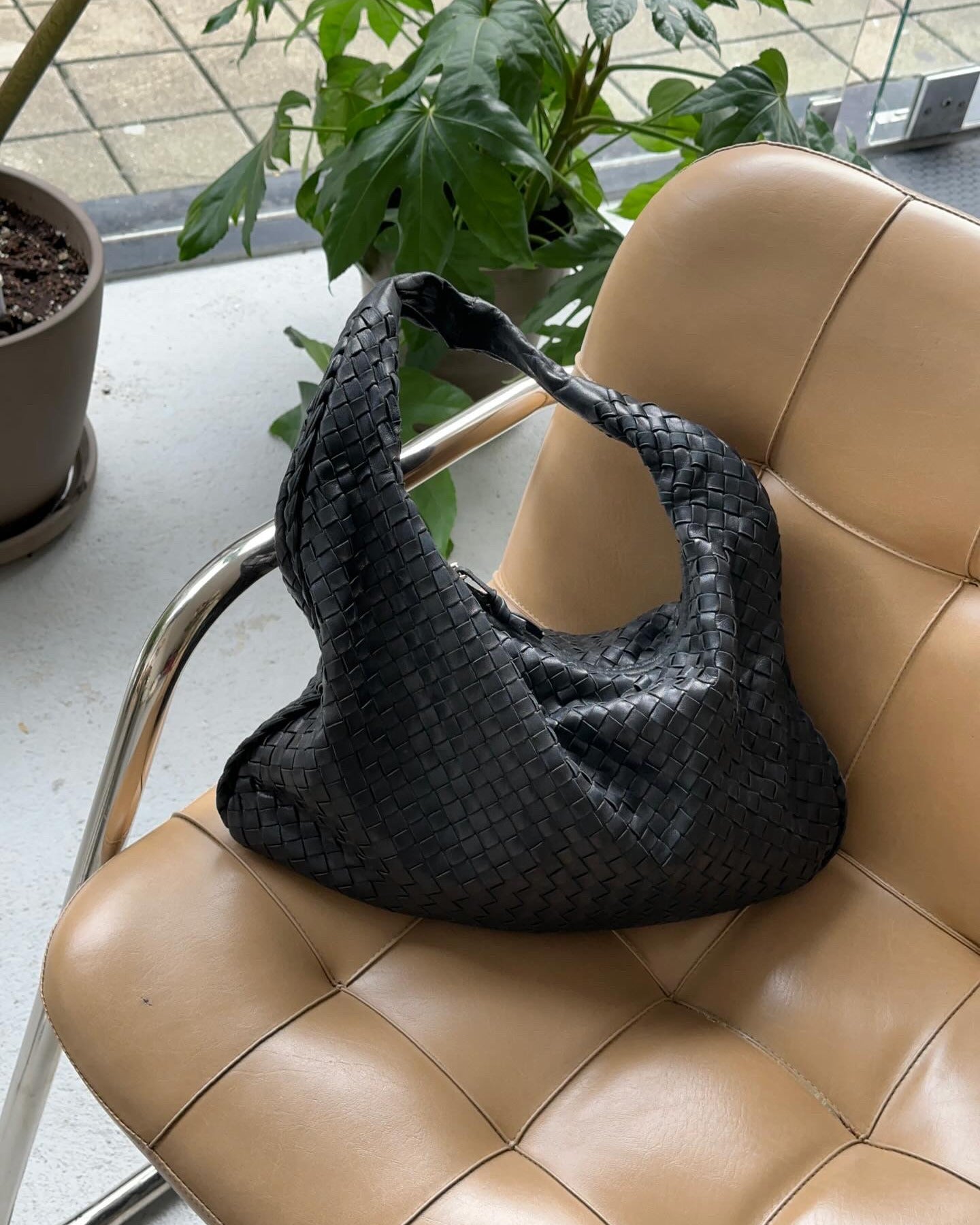
Bottega Veneta occupies a strange, wonderful corner of the luxury world: it is one of the few great houses that built its identity by removing the logo rather than plastering it everywhere. That makes learning how to tell if a Bottega Veneta bag is real a genuinely different exercise from authenticating a Gucci or a Louis Vuitton. There is no monogram canvas to scrutinise, no obvious brand stamp on the front. Instead, everything rests on the craft - the weave, the leather, the weight in your hand. That is both good news and bad news. Good, because the signature Intrecciato weave is fiendishly difficult to counterfeit convincingly. Bad, because the surge of hype around the Cassette, the Jodie and now the Andiamo has flooded the resale market with fakes that fool casual buyers. This guide walks you through every checkpoint a professional uses - weave, leather, hardware, zippers, serial tag and the Made in Italy marker - so you can buy with confidence. Key takeaways from this guide: Intrecciato strip width and uniformity are the single most reliable tell - authentic weave is consistently tensioned with no gaps. Genuine BV leather feels supple, dense and warms to the hand, and smells of real hide rather than plastic. Hardware is weighty and cleanly engraved; many bags use quality Riri zippers. Serial and authenticity tags vary by era - know what fits the bag's age before you judge it. Serial numbers alone never prove authenticity - counterfeiters copy them freely. The safest route is authenticated pre-owned from a professional who hand-checks every piece. Why Bottega Veneta Is Uniquely Hard to Fake - and Easy to Spot Bottega Veneta's founding philosophy - often paraphrased as "When your own initials are enough" - meant the house deliberately avoided visible branding for decades. The result is that authentication cannot lean on a logo. You have to read the craftsmanship instead, and that is precisely why a trained eye can spot a fake BV faster than almost any other brand. The Intrecciato weave is the heart of it. Woven leather strips, cut and tensioned by hand, are extraordinarily hard to replicate at scale. Counterfeiters can copy a stamp; they struggle to copy the discipline of a master weaver in Vicenza. We will move through the checkpoints in order of reliability: the weave first, then leather feel and smell, hardware and zippers, and finally the serial and interior tags. We finish with a consolidated red-flags checklist and model-specific notes for the most-copied bags. Since the Daniel Lee era pushed BV back into hype territory, the volume of fakes has climbed sharply - so knowing these signals matters more than ever. Bottega Veneta bags in stock right nowBalenciaga Papier MiniLouis vuitton Riviera MMLouis vuitton RosewoodLouis vuitton Accessories PochetteChristian Dior Hand BagLoewe Tote BagBottega Veneta Mini JodieLouis vuitton Neverfull PMSee everything in stock → A Short History: The Weave That Became the Logo Bottega Veneta was founded in 1966 in Vicenza, in Italy's Veneto region. The Intrecciato technique grew directly out of local artisan traditions - leather woven so tightly it needed no reinforcement, turning a practical technique into a signature. For years the house's ethos was defiantly logo-free, a quiet counterpoint to the monogram mania of the 1980s and 90s. Under Tomas Maier, that restraint became a refined, timeless aesthetic favoured by clients who wanted luxury without announcement. Everything changed with Daniel Lee's 2019 relaunch. The oversized Pouch, the Cassette, and the exaggerated padded Intrecciato made BV loud in fashion terms while staying visually quiet. His successor, Matthieu Blazy, doubled down on virtuoso craftsmanship - including trompe-l'oeil leather pieces that mimic denim or flannel. Understanding these eras helps you date a bag and know which tags, weave styles and hardware are period-correct. Step 1: Read the Intrecciato Weave If you learn only one thing from this guide, make it this: the weave tells the truth. Authentic Intrecciato strips are cut to a consistent width and tensioned evenly across the entire bag. There are no gaps between strips, no loose sections, and no areas where the tension suddenly slackens. Strip width and tension On classic Intrecciato, the strips are narrow and precise. On padded Intrecciato lines like the Pouch and Cassette, the strips are wider and puffier, but the tension is still even - the padding should look plump and controlled, not lumpy. Fakes almost always betray inconsistent strip widths or wandering tension when you look closely. Edges, corners and seams Look at where the weave meets a corner or a seam. Authentic weaving wraps corners cleanly, with strips tucked and finished neatly. The cut edges of each strip are clean, never frayed and never crusted with visible glue. Counterfeit bags tend to bunch at the corners, misalign the strips, or hide sloppy work under a smear of adhesive. FeatureAuthentic IntrecciatoFake / Warning Sign Strip widthUniform across the whole bagVaries, wanders, inconsistent TensionEven, no gapsLoose sections, visible gaps Strip edgesCleanly cut, finishedFrayed or glue-crusted CornersWeave wraps cleanlyBunching, misalignment Overall lookDisciplined, hand-wovenRushed, machine-flat or messy Step 2: Feel and Smell the Leather Bottega Veneta uses premium nappa and calf leather, and the material has a distinctive character. Authentic hide is supple and dense at the same time - soft to the touch, yet substantial. Within a few seconds of handling, it warms to your hand rather than staying cool and slick like plastic-coated fakes. The smell test Genuine leather smells of hide - a rich, slightly earthy scent. Many counterfeits give off a chemical or plastic odour that no amount of airing removes. It is not a definitive test on its own, but a strong chemical smell is a serious red flag. Weight and structure Real BV bags carry a reassuring heft. The full leather panels and dense weave give the bag a weight that feels expensive. A suspiciously light, hollow feel usually means thin leather or synthetic backing. On the padded lines, the lambskin softness of a Pouch or Cassette should feel pillowy but never flimsy. Colour and edge finishing Colour saturation is even and deep, with no blotchy patches. Where the bag has painted edges or trims, the edge paint should be smooth, evenly applied and free of cracks or drips. Rough, uneven edge paint is a hallmark of cheaper production. Step 3: Inspect Hardware, Engraving and Riri Zippers Bottega Veneta hardware is understated but exceptionally well made. Pick up a zip pull or a clasp and it should feel weighty and solid, with an even, consistent finish. Plating that bubbles, flakes or looks thin and tinny points to a fake. Engraving Where the brand name appears - often on a small hardware plate or the underside of a zip pull - the "BOTTEGA VENETA" engraving should be crisp, correctly spaced and cut to a consistent depth. Shallow, uneven or slightly misspaced lettering is a giveaway. Riri zippers Many Bottega Veneta bags use high-end Riri zippers, one of the finest zipper makers in the world. Look for the Riri logo stamped on the pull or, on some models, subtly on the teeth. A smooth, buttery zip action is characteristic; a stiff, catchy zipper with no recognisable maker's mark should raise questions. Note that not every model uses Riri, so its absence alone is not proof of a fake - but its presence, correctly stamped, is reassuring. Clasps and chains On models like the Jodie and Andiamo, examine the knot clasp or toggle closure and any chain. Chains should be solid and evenly finished, and closures should engage cleanly with a confident magnetic pull or a secure toggle. ElementAuthenticFake / Warning Sign WeightSolid, substantialLight, tinny PlatingEven, durable finishBubbling, flaking EngravingCrisp, correct spacingShallow, uneven, misspaced ZipperRiri stamp, smooth actionNo maker mark, stiff Clasp/chainSecure, cleanly finishedLoose, rough, hollow Step 4: Decode the Serial Number and Interior Tags The Bottega Veneta serial number and interior authenticity tag vary considerably by era, which is exactly why they trip up so many buyers. Older bags carry a leather heat-stamped tag; newer pieces may have a fabric or leather tag with a printed style and serial code, sometimes accompanied by a separate authenticity card. What to look at Check the font consistency - genuine tags use clean, correctly weighted type with no wobble or blur. Look at the stitching around the tag: it should be tight, even and aligned squarely with the tag edges. A tag sewn crooked, with loose or uneven stitches, is a classic fake tell. The Made in Italy marker The Made in Italy marker should be present, correctly placed for the bag's era, and typeset in the same clean font as the rest of the branding. Sloppy spacing, the wrong capitalisation, or a stamp that sits oddly relative to other markings all warrant caution. An important caution Never treat a serial number as proof on its own. Counterfeiters routinely copy real serial codes from genuine bags, so a "correct-looking" number means little in isolation. The serial is one data point among many - always weigh it against the weave, leather and hardware. This is the same discipline we apply across brands; our Gucci authentication guide makes the same point about serial tags being copied. Fake vs Real Bottega Veneta: The Red-Flags Checklist Here is the scannable summary. If a bag trips several of these, walk away. CheckpointAuthentic signalRed flag WeaveUniform strips, even tensionGaps, glue, frayed strips Leather feelSupple, dense, warms to handThin, cool, plasticky SmellReal hideChemical / plastic odour WeightReassuring heftLight, hollow EngravingCrisp, correct spacingSloppy, shallow ZipperRiri or quality makerUnbranded, stiff Interior tagStraight, tight stitchingCrooked, misaligned PriceIn line with marketToo good to be true When to walk away: no interior tag at all, a chemical smell combined with light weight, or a weave that visibly wanders. Any one of those, paired with a price that seems impossibly low, is your cue to stop. Authenticating Hot Models: Cassette, Jodie, Andiamo & Arco The most-copied bags deserve model-specific attention, because counterfeiters concentrate their effort where the hype is. Cassette The Cassette is defined by its padded Intrecciato and its chain. Check that the padded weave is plump and evenly tensioned, and that the proportions are correct - fakes often get the depth of the padding or the boxy silhouette slightly wrong. The chain should be solid, not hollow. Jodie The Jodie's signature is its knot handle and teardrop silhouette. Examine how the weave sits on the pouch body and how cleanly the knot is formed. A limp, poorly shaped knot or a body that won't hold its teardrop form is a warning. Andiamo A newer Blazy-era design, the Andiamo uses a distinctive knot toggle closure and a more structured Intrecciato. Because it is recent, expect current-era tags and hardware - anything that looks like an older heat stamp is out of place. Arco The Arco is a soft, structured tote. Focus on weave tension and how the base sits - an authentic Arco has controlled slouch, while fakes tend to either collapse entirely or feel stiffly artificial. ModelSignature featureAuthentication focus CassettePadded Intrecciato + chainPadding evenness, proportions JodieKnot handle, teardrop shapeKnot form, weave on body AndiamoKnot toggle closureCurrent-era tags & hardware ArcoSoft structured toteWeave tension, base sag Bottega Veneta bags in stock right nowBalenciaga Papier MiniLouis vuitton Riviera MMLouis vuitton RosewoodLouis vuitton Accessories PochetteChristian Dior Hand BagLoewe Tote BagBottega Veneta Mini JodieLouis vuitton Neverfull PMSee everything in stock → Why Authenticated Pre-Owned Is the Safest Route Even with a checklist in hand, authenticating a Bottega Veneta yourself takes practice - the very craft that makes fakes hard to produce also makes subtle differences hard to read for a first-time buyer. That is where professional authentication earns its keep: it removes the guesswork entirely. At Collector's Cage, every piece is hand-checked before it reaches you. Our stock is made up of genuine, one-of-one items, with new arrivals landing weekly. You can browse the current Bottega Veneta collection knowing each bag has passed through expert hands - and every purchase is backed by our Authenticity Guarantee. There is a value angle too. Bottega Veneta's craftsmanship holds up remarkably well on the pre-owned market - a well-kept Intrecciato bag retains its beauty and its worth precisely because it was built to last. If you want to sharpen your eye further, our Louis Vuitton authentication guide applies the same principled approach to a very different house, and reading across brands makes you a smarter buyer overall. Frequently Asked Questions How do I tell if a Bottega Veneta bag is real quickly? Start with the Intrecciato weave: authentic strips are uniform in width and evenly tensioned with no gaps or glue. Then feel the leather - it should be supple, dense and warm to the touch, not light or plasticky. Those two checks catch the majority of poor fakes in seconds. Can I authenticate a Bottega Veneta by its serial number alone? No. Counterfeiters routinely copy genuine serial numbers, so a "correct" code proves nothing on its own. The serial is one data point to weigh alongside the weave, leather, hardware and interior tags. Treat it as supporting evidence, never as a verdict. Do all Bottega Veneta bags use Riri zippers? Many do, but not all, and it varies by model and era. A correctly stamped Riri zipper with smooth action is reassuring, but its absence alone does not condemn a bag. Judge the zipper on quality and finish as well as the maker's mark. Is the Intrecciato weave really that hard to fake? Yes - it is the single hardest element to counterfeit convincingly. Hand-woven, evenly tensioned leather strips demand skill and time that most counterfeiters cannot replicate at scale. Inconsistent strip widths, gaps and glue at the corners are the tells that give fakes away. Where is the Made in Italy marker on a Bottega Veneta bag? It typically appears on or near the interior authenticity tag, with placement and typography varying by era. It should be crisp, correctly spaced and consistent with the rest of the branding. A marker that sits oddly or uses the wrong font is cause for caution. Is buying pre-owned Bottega Veneta safe? It is very safe when you buy from a professional who authenticates every piece. Pre-owned BV offers excellent value because the craftsmanship ages well, and a hand-checked bag with an authenticity guarantee removes the risk of a fake. Buying from an unverified private seller is where the danger lies.


